
Your needs, this model
Does it fit your priorities?
Can I cook eight supplied cups of brown rice with a clock-based timer?
Yes. Brown accepts two to eight cups and two timer settings are provided.
Explore this need in the finder →Can I cook one supplied cup of ordinary white rice?
No. The ordinary White range begins at two cups.
Explore this need in the finder →Is an eight-cup rinse-free batch confirmed by this research?
The exact WAC18 rinse-free cup range remains unresolved; check the instructions supplied with the unit. Do not borrow the ordinary-rice maximum.
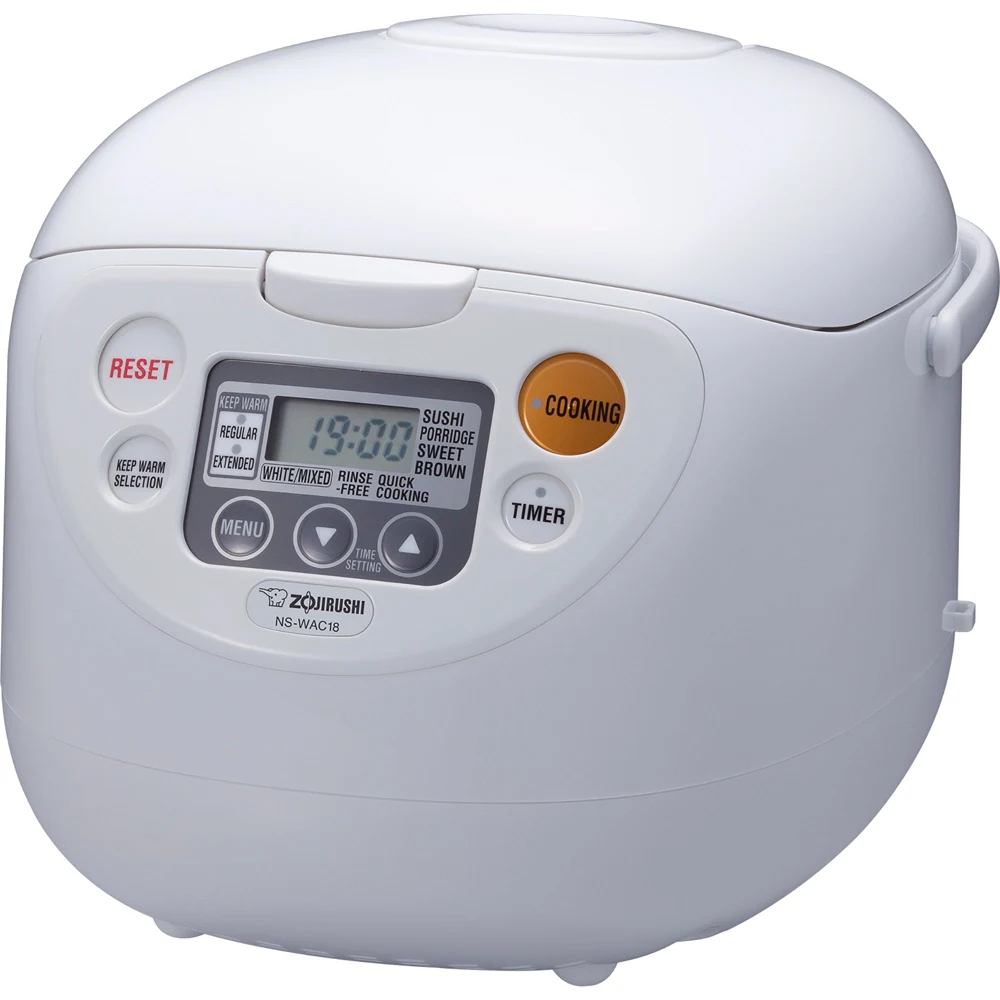
Explore this need in the finder →The NS-WAC18 is a larger rice-focused Micom cooker with a plastic body, automatic and extended Keep Warm, two timer settings and a separate rinse-free measure. It is a candidate for households regularly cooking at least two supplied cups of ordinary rice. Its traditional menu suits rice meals more directly than a varied quinoa-and-oatmeal routine.
Use the minimum as well as the ten-cup maximum
The ordinary White, Quick and Sushi ranges are 2–10 supplied cups of uncooked rice. Brown accepts 2–8, while Mixed and Sweet accept 2–6. Porridge accepts 0.5–2.5. These are measured with the ordinary approximately 180 mL rice cup; they are not standard US cups or fixed cooked serving counts.
A one-cup brown-rice meal is below this model's range. That makes the smaller WAC10 more relevant if a large batch is only occasional. Conversely, a household making six or eight supplied cups of brown rice repeatedly can use the larger pan within its own grain limit. Decide which load occurs most often before reserving counter space for the larger model.
The lower porridge minimum applies to a water-rich dish, rather than a smaller White cycle. Mixed rice has a smaller maximum because other ingredients also occupy the vessel. Follow the exact quantity and placement instructions for the intended dish; the pan's ordinary-rice headline is not permission to fill every recipe to ten cups.
Keep the rinse-free measure with its instructions
The box includes both ordinary and rinse-free rice measures. Use the correct one with the corresponding method and water instructions. Do not borrow another series' green-cup maximum simply because both machines are called ten-cup rice cookers. The exact cup and preparation selection are part of the recipe.
Before sizing a maximum rinse-free batch, check the WAC18 row in the instructions supplied with the exact unit. The standard White maximum alone is insufficient for that decision. Someone who routinely buys rinse-free rice should put that preparation requirement ahead of less relevant extras when comparing this model with the ZCC18.
A focused set of physical controls
The listed programs are White/Mixed, Sushi, Porridge, Sweet, Brown, Rinse-Free and Quick. There is no named quinoa, steel cut oatmeal, Jasmine or GABA Brown program, and no Cake or Steam menu. Its usefulness comes from substantial rice loads and familiar serving controls rather than a broad collection of named grains.
The microcomputer adjusts a direct-heating cooking cycle. This model does not provide induction, pressure or feedback-based My Rice adjustments. If named quinoa and oatmeal are essential, compare the DCC18 or EAC18. If a supplied basket is central to dinner, compare a configuration with an approved steaming method rather than treating any lidded rice cooker as a two-level steamer.
Serving a household on a schedule
Two timer settings let you plan familiar rice meals around recurring finish times. Give the selected program enough lead time, and follow ingredient restrictions when delaying. Automatic and extended Keep Warm can support appropriate plain-rice serving in stages. A mixed meal with other ingredients should not inherit the same delay and holding routine without checking the recipe.
A dent-resistant plastic body and removable power cord make this a conventional appliance to handle and store. The nonstick pan remains coated cookware. Protect it with appropriate utensils and wash the pan, detachable inner lid and other rice-contact parts as instructed. A larger cooking capacity also means a larger pan to carry to the sink and dry afterward.
Measure its working position
The current US store lists approximately 11.125 inches wide, 14.375 deep and 9.875 high. Other official listings use a slightly different width, so confirm the exact unit if a shelf or narrow gap leaves little margin. Allow extra space to open the lid, lift the pan and keep steam clear of furniture.
Choose the WAC18 for repeated two-cup-and-up rice meals, its rinse-free preparation and traditional menu. Downsize for one-cup weekday loads. Choose a broader-menu or basket model when that food or cooking method is the actual daily requirement; additional white-rice capacity cannot supply those missing functions.
Sources: Zojirushi US product page and NS-WAC10/18 instructions.
Key details at a glance
| Capacity and cup basis | Supplied approximately180mL raw rice cup. Use grain-specific ranges; unknown minimums are not inferred from headline maximum. |
|---|---|
| Closed width | 11.12 in |
| Closed depth | 14.38 in |
| Closed height | 9.88 in |
| Heating and controls | direct |
| Delay timer | Yes |
| Automatic Keep Warm | Yes |
| Supplied steaming basket/tray | No |
| GABA Brown program | No |
| Pressure-assisted rice cooking | No |
| My Rice feedback adjustment | No |
| Prescribed Cake program | No |
| Control arrangement | menu |
| Timer arrangement | clock |
Use the exact model’s instructions for operating limits, supplied equipment and version differences.
Sources for this assessment
Put your batch and serving needs together.
Choose the dry amount, grain program and useful accessories.