
Your needs, this model
Does it fit your priorities?
Can I pressure-cook eight supplied cups of GABA Brown?
Yes. Its GABA Brown range is 2–8 supplied cups.
Explore this need in the finder →Can I cook one supplied cup of brown rice?
No. Brown starts at two supplied cups on the NWC18.
Explore this need in the finder →Can I make one-and-a-half supplied cups of Jasmine congee?
Yes. Its exact Jasmine congee range is 0.5–1.5 supplied cups.
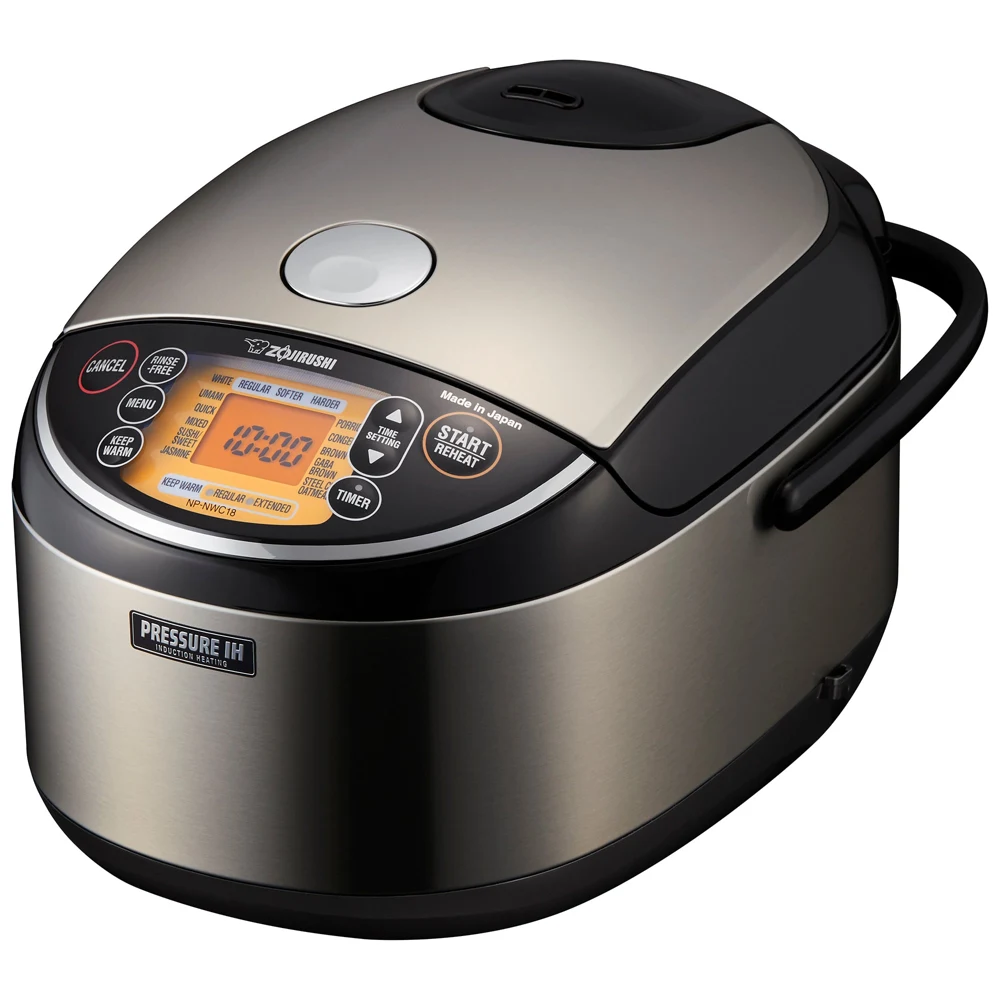
Explore this need in the finder →The NP-NWC18 is a large pressure-induction rice cooker for a household that regularly needs more than the smaller NWC10 can accommodate. Its eight-cup brown-rice ceiling and ten-cup white-rice ceiling are useful for meal preparation. The price of that extra room is a larger counter footprint and higher minimums for several everyday grains.
Capacity for the batch you repeat
The ordinary white-rice range is 1–10 supplied cups of uncooked short or medium grain rice. The clear cup is approximately 180 mL, rather than an eight-fluid-ounce US measure. Jasmine uses the same 1–10-cup range. Brown and GABA Brown are limited to 2–8 supplied cups, so the larger pan is a poor match if your usual brown-rice load is only one cup.
Mixed rice accepts 2–6 cups. That lower maximum matters if the cooker will make seasoned rice with other ingredients for a group. Extra pan volume needed by those ingredients cannot be counted as more plain rice. Measure and add ingredients according to the relevant recipe, rather than use the ten-cup headline as a universal fill allowance.
The supplied green cup is reserved for rinse-free white rice; the manual gives separate volume figures for that measure. Keep it distinct from the clear cup. The numeric quantity, rice type, water scale and measuring tool need to describe the same cooking method. Cooked serving counts remain variable and should be estimated from the way your household portions its normal recipe.
Pressure does not require manual pressure selection
The appliance combines induction with pressure levels selected by its cooking programs. Regular, softer and harder white-rice choices offer an approachable way to adjust texture. Umami uses a longer preparation routine, while Quick provides a different time choice. These are useful alternatives if you can make room for them in the meal schedule. They do not establish that a particular setting will improve every grain or suit every diner.
The inner pan is 1.7 mm thick with a platinum-infused nonstick coating. Handle it as coated cookware. Do not mistake the stainless-colored body for a bare stainless rice-contact surface. The large pan also needs a comfortable washing and drying position where it will not knock against harder cookware.
Breakfast quantities deserve their own check
Steel cut oatmeal has a 1–3-cup range. That works for a larger breakfast batch but excludes a half-cup load. Porridge made from short or medium grain white rice accepts 0.5–2.5 cups, while Jasmine congee accepts 0.5–1.5. The different lower limits are a reason to compare the actual menus rather than assume a large rice cooker is equally flexible for all small breakfasts.
Automatic and extended Keep Warm, plus reheating, help organize suitable rice meals. Follow the restrictions for grains and mixed dishes instead of extending the plain-rice serving routine to everything. A finish-time timer is convenient only when the selected cooking program has enough time to finish. The longer GABA Brown routine needs to be part of the plan from the outset.
A large pressure lid is part of ownership
The manual calls for cleaning the detachable inner-lid filter after every use and checking the pressure-control and safety valves. These components deserve attention alongside the cooking pan. A household buying this machine for frequent large batches should consider who will empty, wash and reassemble it after the meal. An automatic cooking cycle does not mean maintenance is automatic.
The approximate closed dimensions are 11.125 inches wide, 16.5 deep and 10.125 high. Open height is approximately 18.75 inches. It is particularly worth measuring counter depth if plates, utensils or another appliance must sit in front of it. The supplied accessories include measuring tools and a spatula with holder; a steaming basket is not part of the package.
Which household fits?
The NWC18 is relevant for substantial pressure-IH rice meals, including two-to-eight-cup brown-rice batches and larger steel cut oatmeal breakfasts. Choose the NWC10 when lower minimums will be useful more often. Compare the JEC18 if feedback-based white-rice texture refinement is the main attraction. For non-pressure induction and quinoa, the QAC18 offers a different menu and supplied tray.
Sources: Zojirushi US specifications and NP-NWC10/18 manual.
Key details at a glance
| Capacity and cup basis | 180mL supplied uncooked cup; white 1–10, brown 2–8; cooked yield varies. |
|---|---|
| Closed width | 11.12 in |
| Closed depth | 16.5 in |
| Closed height | 10.12 in |
| Heating and controls | induction |
| Delay timer | Yes |
| Automatic Keep Warm | Yes |
| Supplied steaming basket/tray | No |
| GABA Brown program | Yes |
| Pressure-assisted rice cooking | Yes |
| My Rice feedback adjustment | No |
| Approximate height with lid open | 18.75 in |
| Control arrangement | menu |
| Timer arrangement | clock |
Use the exact model’s instructions for operating limits, supplied equipment and version differences.
Sources for this assessment
Put your batch and serving needs together.
Choose the dry amount, grain program and useful accessories.