
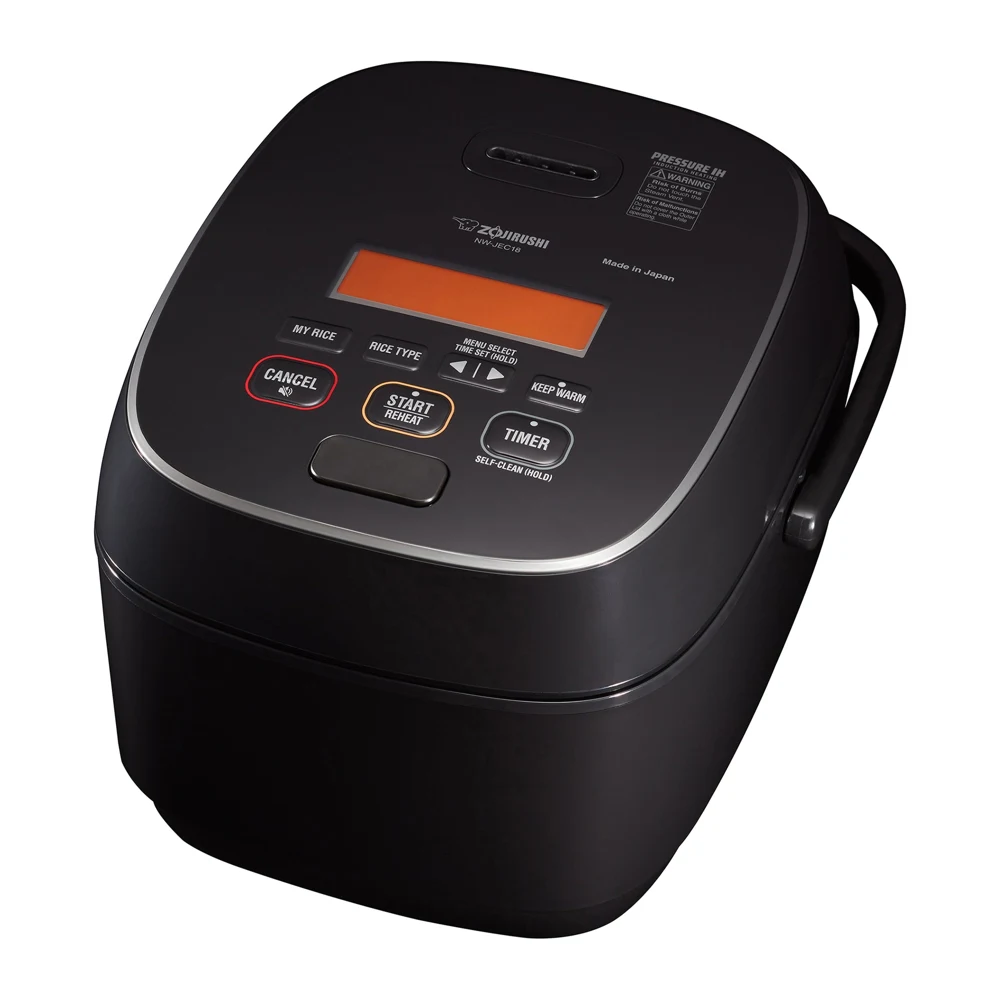
Your needs, this model
Does it fit your priorities?
Can I use pressure cooking for eight supplied cups of GABA Brown?
Yes. Its GABA Brown range is 2–8 supplied cups with pressure and induction heating.
Explore this need in the finder →Will half a supplied cup of steel cut oats fit?
No. Steel cut oatmeal starts at one supplied cup on this larger model.
Explore this need in the finder →Can I select My Rice feedback for a ten-cup white-rice batch?
Yes. The My Rice program supports1–10 supplied cups of short or medium grain white rice.
Explore this need in the finder →The NW-JEC18 combines a large rice pan with pressure, induction heating and fine white-rice texture adjustments. It is a sensible candidate for a household that cooks several supplied cups at a time and wants to refine a familiar rice routine. Its ten-cup white-rice capacity should not obscure the two-cup minimum for brown rice or the substantially smaller breakfast limits.
Start with the meal-preparation load
The ten-cup maximum means uncooked short or medium grain white rice measured with the supplied approximately 180 mL rice cup. The documented white-rice range is 1–10 cups. Jasmine and My Rice use that same dry-rice range. This is not ten US measuring cups, and it is not a stated number of cooked servings. Portion sizes and water absorption vary, so compare cookers using the raw supplied-cup amount first.
Brown and GABA Brown support 2–8 supplied cups. That makes the machine plausible for a substantial meal-preparation batch, but unsuitable for a one-cup brown-rice supper within the documented limits. Mixed rice has a 2–6-cup range because the whole recipe occupies the pan. A ten-cup machine is therefore not a ten-cup mixed-rice machine. Use its prescribed ingredient handling and water level for the actual dish.
A large pot with a personal texture routine
The unusual attraction is My Rice: you report how a batch turned out, and the cooker adjusts its cooking flow. Zojirushi describes 49 adjustments. Separate white-rice choices include regular, soft, softer, firm and firmer. For a large household that has an established preference, this offers a way to refine a repeated recipe rather than argue over one fixed setting. Consistent rice measurement and water loading remain important to making those changes meaningful.
Pressure and induction operate together with a 2.2 mm coated inner pan. The pressure system is designed around the machine's supported rice menus. It should not be read as approval to substitute general pressure-cooker recipes or improvise with foods that could interfere with the steam path. Check the lid and vent as instructed before starting a large batch.
Breakfast is a different capacity decision
Steel cut oatmeal accepts 1–3 supplied cups of dry oats. Short or medium grain rice porridge accepts 0.5–2.5 cups, while Jasmine congee accepts 0.5–1.5. If you want only half a cup of dry oats for breakfast, the smaller NW-JEC10 has a more appropriate oatmeal minimum. The larger model earns its space through repeated larger loads, rather than by improving every small-batch use.
The two-memory finish-time timer can organize a familiar routine. GABA Brown and other extended cycles require enough lead time; quick white and quick Jasmine provide different menu choices when the schedule is tighter. Timer use and Keep Warm must still follow the restrictions for the recipe. Neither function turns dairy or other perishable ingredients into suitable unattended loads.
Allow room for the lid and cleaning
The body is approximately 12 inches wide, 14.625 deep and 9.75 high. The manual gives an open-lid height of about 19.75 inches. Measure that second figure carefully if the cooker will sit under cabinets. Also consider whether you can comfortably remove the large pan for filling and washing. An appliance can fit on a counter while remaining awkward to use there.
The removable inner lid and integrated vent provide cleaning access, and the odor-reducing self-cleaning cycle is a useful supporting function. It does not replace cleaning the rice-contact and pressure components as directed. Protect the pan's nonstick surface and inspect the lid's small parts. The supplied cup and self-standing spatula cover basic rice handling; there is no supplied steaming basket for a separate vegetable layer.
Where it fits
The JEC18 is relevant when large batches, pressure-assisted cooking and personal white-rice texture control all matter together. For large batches with a simpler non-pressure induction system, compare the NP-HCC18. For frequent small brown-rice or oatmeal loads, downsize according to the actual program minimum. The right reason to choose this large JEC is a recurring need that uses its capacity and adjustment features, plus willingness to maintain its pressure lid properly.
Sources: Zojirushi US specifications and NW-JEC10/18 manual.
Key details at a glance
| Capacity and cup basis | 180mL supplied uncooked cup; white 1–10, brown 2–8; cooked yield varies. |
|---|---|
| Closed width | 12 in |
| Closed depth | 14.62 in |
| Closed height | 9.75 in |
| Heating and controls | induction |
| Delay timer | Yes |
| Automatic Keep Warm | Yes |
| Supplied steaming basket/tray | No |
| GABA Brown program | Yes |
| Pressure-assisted rice cooking | Yes |
| My Rice feedback adjustment | Yes |
| Approximate height with lid open | 19.75 in |
| Control arrangement | menu |
| Timer arrangement | clock |
Use the exact model’s instructions for operating limits, supplied equipment and version differences.
Sources for this assessment
Put your batch and serving needs together.
Choose the dry amount, grain program and useful accessories.