
Your needs, this model
Does it fit your priorities?
Can I cook five green cups of rinse-free white rice?
No. The exact regular/quick rinse-free limit is four green cups on the ZCC10.
Explore this need in the finder →Can I use an official method for one cup of quinoa without a named Quinoa button?
Yes. Zojirushi’s exact model grain guide specifies1–4 supplied cups using Quick, with no Keep Warm.
Explore this need in the finder →Does one cup of brown rice fit a direct-heating model?
Yes. Its Brown range is1–4 supplied cups and it uses direct heating.
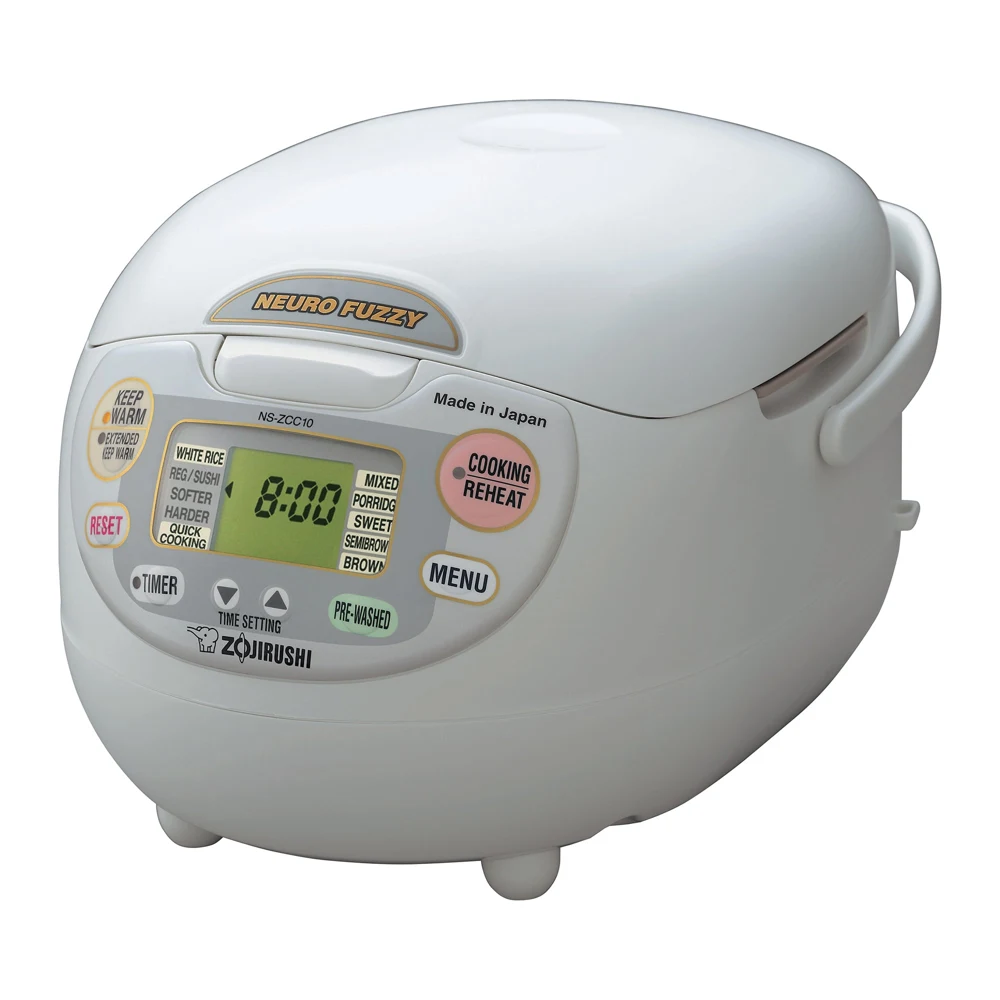
Explore this need in the finder →The NS-ZCC10 is a rice-focused microcomputer cooker for someone who wants white-rice texture choices and convenient serving controls without induction or pressure. Its more distinctive everyday features are the inner pan's side handles, retractable cord and separate rinse-free rice measure. Choose it around a minimum of one supplied cup of ordinary white or brown rice.
The minimum is not half a cup
The exact manual rates regular white rice for 1–5.5 supplied cups before cooking. Brown and semi-brown accept 1–4 cups, mixed rice 1–4, and porridge 0.5–1.5. The supplied ordinary-rice cup is approximately 180 mL. A household cooking one cup for dinner and several cups for the next few meals is within a useful range. Someone wanting half a cup of plain white rice should examine another model rather than assume every 5.5-cup Zojirushi starts that low.
Rinse-free rice is a particularly important exception. Its separate green cup measures approximately 171 mL, and the manual's regular/quick rinse-free range is 1–4 of those cups. That differs from the ordinary white-rice maximum. Follow the correct cup, button and water instructions together. The current product headline does not describe every rice preparation that fits inside the pan.
Texture choices without a pressure system
Regular/sushi, softer and harder white-rice choices are available alongside mixed, sweet, porridge, semi-brown, brown and Quick. The microcomputer adjusts heating time and temperature through its cooking routine. This is a direct-heating model, so buyers specifically requiring induction should compare the HCC or QAC series instead. It does not have the My Rice feedback feature of the JEC series.
The benefit of the white-rice selections is an accessible routine to repeat with the same grain. Start with the prescribed water line and change one variable at a time if the result needs adjustment. Keep the rice measure consistent so that a change in texture is easier to relate to the water level or program you selected.
A recipe method is different from a dedicated button
There is no named Jasmine or quinoa program on the control panel. However, Zojirushi's model-specific grain guide supplies methods for other foods: Jasmine through White, long grain white rice through Mixed, and quinoa through Quick. For example, its quinoa guide specifies1–4 supplied cups and says not to use Keep Warm. This is useful evidence for an owner willing to follow a recipe method, but it should not be described as a dedicated quinoa setting.
That distinction helps separate two real buying preferences. Someone who wants a clearly named Quinoa program may prefer the QAC10. Someone comfortable selecting Quick and following an official grain-specific water ratio can consider the ZCC10. Use the particular method's load limits instead of treating the rice program's maximum as the grain's maximum.
Serving and handling
Automatic and extended Keep Warm, reheating and two timer memories suit a familiar plain-rice routine with staggered serving times. They are not universal permissions for other grains. The quinoa example shows why a machine can have Keep Warm while a particular recipe should not use it.
The inner pan has side handles, which are useful for a deliberate filling and cleaning routine. The retractable cord can help keep a stored appliance tidy. Neither feature means the cooker should be moved while operating. The supplied cup, rinse-free cup, spatula and holder cover rice handling; no steaming basket is supplied. A removable inner lid provides access for washing, while the coated pan needs appropriate utensils and gentle cleaning.
Space and alternatives
The current US store lists approximately 10.125 inches wide,13 deep and8.125 high. Measure additional room to open the lid and lift the pan rather than rely on the closed height alone. Choose this model for one-cup-and-up rice meals, familiar texture options and practical handling features. The ZCC18 increases capacity, while the LGC05 is more relevant to frequent half-cup loads. If a supplied steam tray and named Jasmine menu are essential, examine the GAC10.
Sources: current US specifications, NS-ZCC instructions and manufacturer grain methods.
Key details at a glance
| Capacity and cup basis | 180mL ordinary supplied cup; white 1–5.5, brown 1–4; cooked yield varies. |
|---|---|
| Closed width | 10.12 in |
| Closed depth | 13 in |
| Closed height | 8.12 in |
| Heating and controls | direct |
| Delay timer | Yes |
| Automatic Keep Warm | Yes |
| Supplied steaming basket/tray | No |
| GABA Brown program | No |
| Pressure-assisted rice cooking | No |
| My Rice feedback adjustment | No |
| Separate Slow Cook menu | No |
| Extended Umami rice program | No |
| Control arrangement | menu |
| Timer arrangement | clock |
Use the exact model’s instructions for operating limits, supplied equipment and version differences.
Sources for this assessment
Put your batch and serving needs together.
Choose the dry amount, grain program and useful accessories.