
Your needs, this model
Does it fit your priorities?
Can I use direct heating for one supplied cup of long grain white rice?
Yes. The named Long Grain White program accepts 1–5.5 supplied cups.
Explore this need in the finder →Can I make half a supplied cup of steel cut oats?
No. The EAC10 oatmeal minimum is one supplied cup.
Explore this need in the finder →Can I choose direct heating for one supplied cup of quinoa?
Yes. Its dedicated Quinoa program accepts 1–4 supplied cups.
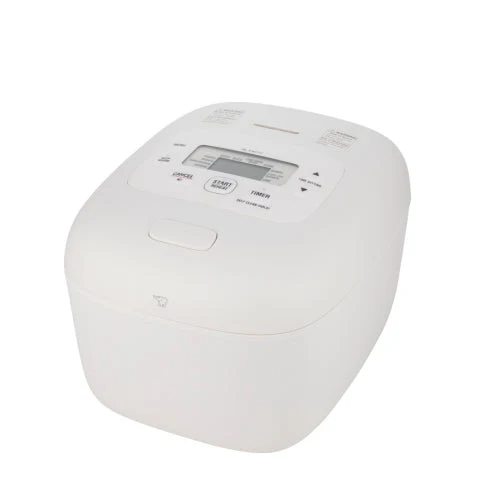
Explore this need in the finder →The NL-EAC10 is a direct-heating microcomputer cooker with dedicated long grain white, Jasmine, quinoa and steel cut oatmeal programs. It suits someone who wants a broad grain routine in a fairly compact flat-top body and does not need a supplied steaming tray. Its one-cup minimum for oatmeal is an important limitation for small breakfasts.
Named grain programs with explicit quantities
White, Quick, Long Grain White, Sushi and Jasmine accept1–5.5 supplied cups of uncooked rice. Brown and GABA Brown accept1–4. Quinoa has a dedicated1–4-cup range, while steel cut oatmeal accepts 1–2.5. The supplied rice measure is approximately 180 mL. Compare those dry ingredient quantities rather than cooked bowl counts or ordinary US measuring cups.
The named Long Grain White program is useful if you regularly cook a different rice style from short or medium grain white rice. It provides an explicit routine instead of relying on a generic label or transferring a recipe from another cooker. Jasmine has its own selection as well. Follow the correct water scale for each grain rather than assume all white-rice programs share a single ratio.
Check a small breakfast before buying
One supplied cup of dry steel cut oats is the documented minimum. If your normal breakfast starts with half a cup, the EAC10 is not the right fit within that range. The QAC10 supports a smaller oatmeal load, as do several specifically documented small cookers. A broad menu is useful only when the quantities suit your household.
Jasmine congee accepts 0.5–1 supplied cup of rice, so the EAC10 can make a smaller dry-rice porridge-style load. That is a different recipe from steel cut oatmeal, with different grain and water instructions. Its smaller congee minimum does not establish permission for a half-cup oat cycle. Also distinguish Jasmine congee from a dedicated short or medium grain porridge menu.
Direct heating rather than pressure or induction
The microcomputer manages a direct-heating cooking system. This offers programmed grain routines without the pressure mechanism of the NWC or JEC series, or the induction system of the QAC series. Choose it when the named programs and their load ranges are the features you need. A buyer specifically seeking induction should start with a different series.
GABA Brown is a separate extended preparation program. It is a scheduling choice, not a medical promise. Cake provides another prescribed use with its own ingredient load. Neither feature should be used to justify recipes outside the operating instructions.
Serving features and the supplied equipment
Automatic and extended Keep Warm, reheating and two timer memories support appropriate rice meals and familiar finish times. Grain-specific holding restrictions still apply. The fact that the appliance has Keep Warm does not mean quinoa, oats and every mixed dish should be left on it.
A rice measuring cup and self-standing spatula are supplied. There is no Steam program or supplied steaming basket in this configuration. Someone seeking one appliance specifically for rice plus a vegetable tray should compare the actual supplied equipment of another model. The EAC10 is a grain-and-cake appliance, rather than a substitute for a supported two-level steaming setup.
A low top still needs opening space
The closed body measures approximately 9.875 inches wide,12.5 deep and8.5 high. The manual gives about 17.875 inches with the outer lid open. Check that second figure under a cabinet, as well as whether you can lift out the pan. Steam needs an unobstructed route during operation.
The inner lid detaches, the steam vent is integrated and the cord is removable. A self-cleaning cycle helps reduce odors; it does not replace washing the food-contact parts. The manufacturer states that the food-contact areas are BPA-free. That statement should not be expanded into an unlisted PFAS declaration or an assumption that the coated pan is bare stainless steel.
Our fit assessment
Choose the EAC10 for one-cup-and-up rice, quinoa and oatmeal routines with clearly named programs and a modest closed footprint. The EAC18 increases capacity but raises ordinary grain and oatmeal minimums to two cups. The TPC10 answers a different priority through a supplied basket and explicit PFAS/BPA food-contact declaration. Choose by the meal and material requirements that you will actually use.
Sources: Zojirushi US product page and NL-EAC10/18 English manual.
Key details at a glance
| Capacity and cup basis | 180mL supplied uncooked cup; white 1–5.5, brown 1–4; cooked yield varies. |
|---|---|
| Closed width | 9.88 in |
| Closed depth | 12.5 in |
| Closed height | 8.5 in |
| Heating and controls | direct |
| Delay timer | Yes |
| Automatic Keep Warm | Yes |
| Supplied steaming basket/tray | No |
| GABA Brown program | Yes |
| Pressure-assisted rice cooking | No |
| My Rice feedback adjustment | No |
| Approximate height with lid open | 17.88 in |
| Prescribed Cake program | Yes |
| Control arrangement | menu |
| Timer arrangement | clock |
Use the exact model’s instructions for operating limits, supplied equipment and version differences.
Sources for this assessment
Put your batch and serving needs together.
Choose the dry amount, grain program and useful accessories.