
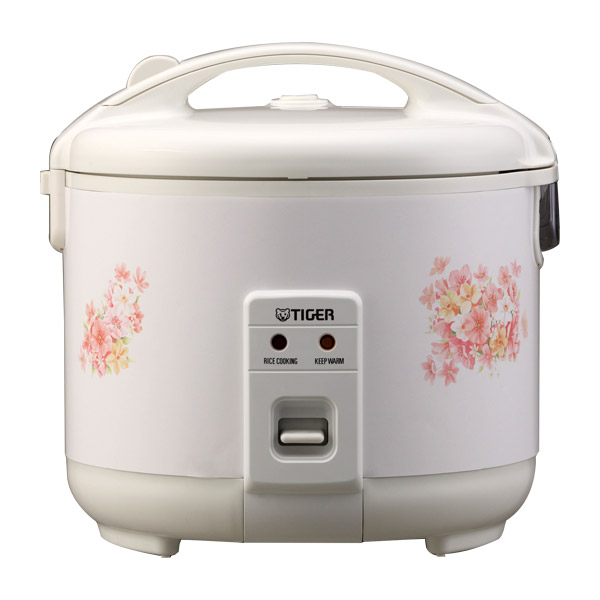
Your needs, this model
Does it fit your priorities?
Can the JNP-1800 make its maximum white-rice batch?
Yes. The exact U.S. manual lists a maximum of 10 level supplied cups for the Plain method.
Explore this need in the finder →Can the JNP-1800 make a white-rice batch outside its documented capacity range?
No. The exact manual range is 3–10 supplied cups; a batch outside that span is not confirmed for this model.
Explore this need in the finder →Can I require a delayed-finish timer on the JNP-1800?
No delayed-finish control is documented for the physical-switch model; automatic Keep Warm begins after cooking and is not a schedule.
Explore this need in the finder →Tiger · conventional rice cooker · current U.S. configuration
Tiger JNP-1800 review
The Tiger JNP-1800 is the largest size in the current conventional JNP family. It is specified for three to ten supplied cups of plain white rice, in a 1.8-liter cooker. The higher ceiling is its reason to exist; the model does not add a timer or specialty grain menus to the simpler JNP-1500. For shoppers who usually cook enough rice to make use of that ten-cup maximum, it expands batch size without increasing the listed footprint width or depth compared with the 1.5-liter JNP-1500.
Ten cups is not the right target for every household
The manual’s cup is about 0.18 liter (5.29 ounces), with one level cup described as about 150 grams. It is not a standard U.S. measuring cup and it does not mean ten cups of cooked rice. Use the supplied cup and follow the white-rice scale on the inner pot. The JNP-1800 minimum is three cups; a two-cup meal is below the documented range. The smaller JNP-1000 accepts one to 5.5 cups, and the 1.5-liter JNP-1500 accepts three to eight. If ten cups is only an occasional ambition, consider whether the smaller range suits more of your everyday cooking.
The outer body is about 11.8 inches wide, 10.7 deep, and 11.7 high. Tiger lists the weight at approximately 8.1 pounds and rated power at 650 watts. The JNP-1500 shares the same listed width and depth, stands about an inch shorter, weighs about 7.7 pounds, and is rated at 560 watts. These details distinguish their stated configurations; they do not establish that one cooks faster or produces better texture. Leave the manual’s recommended 11.8-inch clearance from walls and furniture for steam and heat.
Simple controls, limited timing
This is not a programmable pressure cooker. The JNP-1800 uses a heating plate and a single physical cook switch, and the manufacturer identifies only a Plain Rice menu setting. Start a batch yourself, allow the cycle to run, and the switch changes over to automatic Keep Warm at the end. The manual advises keeping the lid closed for approximately 15 minutes during the steaming stage before loosening the rice with the supplied spatula. There is no documented delayed finish, timer, clock display, GABA, brown-rice, or porridge setting, and no steam basket is included.
After cooking, the warmer has constraints. The manual approves Keep Warm for white rice, including rinse-free white rice, but says not to use it for more than 12 hours. It cautions against warming less than the minimum batch, cold rice, rice mixed with a fresh cold batch, and anything other than white rice. That makes the automatic switch-over useful when dinner is being served shortly after cooking; it is not a scheduling tool, an extended storage promise, or a reheating function.
Care and materials
The pot is aluminum with a fluorine coating according to the U.S. page; the manual calls its lining fluorocarbon resin. Tiger’s California materials disclosure lists JNP-1800 among products with PFAS intentionally added for nonstick properties. That wording is not a health finding, and it is not a BPA-free or all-food-contact-surface-free certification. A buyer requiring an explicit PFAS-free declaration should rule it out unless the manufacturer updates the exact-model disclosure. To preserve the lining, the manual says to wash rice separately, avoid metal utensils and abrasive cleaners, and hand-wash parts rather than using a dishwasher or dryer. The inner lid, steam vent, and condensation collector are removable, so regular cleanup is part of ownership, not a sealed-and-forget design.
When the large size is worthwhile
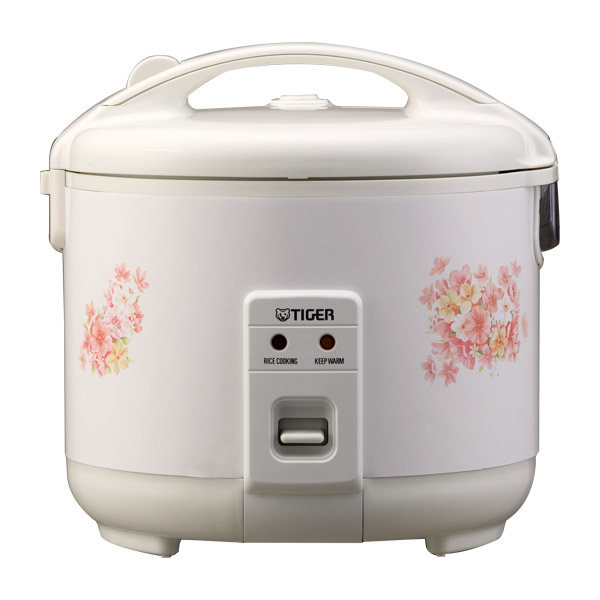
JNP-1800 suits a routine that reaches eight to ten supplied cups of plain white rice, and it is a more natural choice than the JNP-1500 when batches repeatedly exceed eight. The 1500 is a little shorter and lighter, with the same published width and depth, so a shelf-height constraint may point that way even if capacity is close. The JNP-1000 is better when one- or two-cup cooking is common. For timer automation, mixed grains, pressure, or warming brown rice, look outside this single-switch family; a bigger pot will not answer those needs. The shared official JNP photo is a family-level view and does not mark the pictured capacity, so identify the exact suffix from the product label.
Bottom line: JNP-1800 is the capacity-maximizing conventional option here, not an all-purpose programmable cooker. Its ten-cup top end is valuable only if your regular batch and kitchen clearance make use of it.
Key details at a glance
| Capacity and cup basis | Tiger's supplied cup is about 0.18 L / 5.29 oz (about 150 g level). JNP-1800: 3–10 supplied cups of Plain white rice only; cooked yield varies. No distinct rice shape, brown, porridge or mixed-grain plan is documented. |
|---|---|
| Closed width | 11.8 in |
| Closed depth | 10.7 in |
| Closed height | 11.7 in |
| Heating and controls | switch |
| Delay timer | No |
| Automatic Keep Warm | Yes |
| Supplied steaming basket/tray | No |
| GABA Brown program | No |
| Pressure-assisted rice cooking | No |
| My Rice feedback adjustment | No |
| Separate Slow Cook menu | No |
| Maker PFAS/BPA food-contact declaration | No |
| Documented combined rice method | No |
| Prescribed Cake program | No |
| Control arrangement | single_switch |
| Timer arrangement | none |
| Manufacturer material disclosure | Aluminum inner pot with a fluorine/fluorocarbon nonstick lining. Tiger's U.S. disclosure names JNP-1800 under products with PFAS intentionally added for nonstick properties; no health conclusion or separate BPA-free claim follows from that disclosure. The manual cautions against metal or abrasive utensils and recommends hand cleaning. |
Use the exact model’s instructions for operating limits, supplied equipment and version differences.
Sources for this assessment
Put your batch and serving needs together.
Choose the dry amount, grain program and useful accessories.