
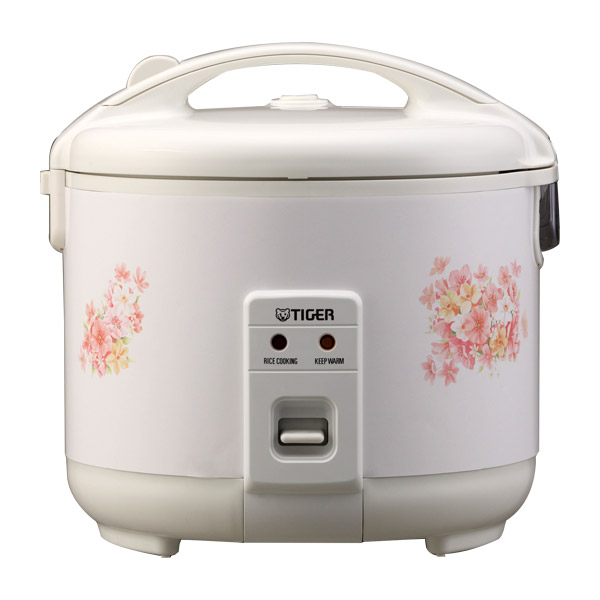
Your needs, this model
Does it fit your priorities?
Can the JNP-1500 make its maximum white-rice batch?
Yes. The exact U.S. manual lists a maximum of 8 level supplied cups for the Plain method.
Explore this need in the finder →Can the JNP-1500 make a white-rice batch outside its documented capacity range?
No. The exact manual range is 3–8 supplied cups; a batch outside that span is not confirmed for this model.
Explore this need in the finder →Can I require a delayed-finish timer on the JNP-1500?
No delayed-finish control is documented for the physical-switch model; automatic Keep Warm begins after cooking and is not a schedule.
Explore this need in the finder →Tiger · conventional rice cooker · current U.S. configuration
Tiger JNP-1500 review
The JNP-1500 is the 1.5-liter size in Tiger’s conventional JNP rice-cooker range. The key number for deciding fit is not the nominal liters alone: Tiger’s U.S. manual specifies three to eight supplied cups of plain white rice for this exact model. Its higher minimum is a real tradeoff. The extra capacity is useful for a shared table, but it is not the best choice if the usual batch is one or two cups.
Plan around the three-cup floor
Tiger’s measuring cup is about 0.18 liter, or 5.29 ounces; the manual describes a level cup as roughly 150 grams. Use that supplied cup and the corresponding water line, not an ordinary U.S. measuring cup. The JNP-1500 handles a stated three-to-eight-cup span. This means a three-cup batch is within range, while two cups is below the manufacturer’s documented minimum. When your needs move between a small weekday amount and a larger gathering batch, that lower limit may matter more than the eight-cup ceiling. The JNP-1000 starts lower, at one cup, and is the more versatile direction if you often cook just for one or two.
The body measures about 11.8 inches across, 10.7 inches deep, and 10.7 inches high; Tiger lists it at approximately 7.7 pounds and 560 watts. The JNP-1800 keeps the same stated width and depth, but is about an inch taller and rated at 650 watts. These details help with a shelf or counter plan, but leave clearance for steam: the manual recommends at least 11.8 inches between the cooker and nearby walls or furniture. Its published specifications do not provide cycle times, so wattage should not be used as a cooking-speed ranking.
A plain-rice workflow
The JNP-1500 is a conventional heating-plate design with a physical switch. Tiger’s product page shows one computerized menu setting—Plain Rice—and its manual walks through measuring, rinsing in a separate bowl, using the Plain water scale, and pressing the switch when you are ready to cook. When cooking ends, the switch returns and automatic Keep Warm starts. Leave the lid closed for about 15 minutes during the post-cook steaming period, then loosen the rice with the included spatula. There is no documented delay timer, clock-based finish setting, pressure cooking, porridge mode, or included steam basket.
Keep Warm is useful as a short bridge from cooking to serving, not as a way to set a meal time or store rice indefinitely. Tiger says to use it for white rice only and not for more than 12 hours. The manual also warns against warming cold rice, topping up hot rice with cold rice, leaving the spatula inside, or warming a very small quantity. If your routine depends on holding brown or seasoned rice, reheating leftovers, or scheduling rice to finish while you are away, the JNP-1500’s simple operation does not supply those capabilities.
Coating care is a practical constraint
Tiger identifies the pot as aluminum with a fluorine coating; its manual uses the term fluorocarbon-resin lining. The U.S. materials disclosure explicitly lists JNP-1500 in the PFAS-intentionally-added group for nonstick properties. That statement should be read as a material disclosure, not a medical or safety conclusion. It means the model does not meet an essential request for a manufacturer-confirmed PFAS-free pot. If your concern is simply ordinary care, the maintenance requirements are more concrete: rinse rice in another bowl, dry the pot exterior before it sits on the heating plate, use a soft sponge and the supplied or wooden spatula, and hand-wash the removable inner lid, vent, and condensation collector.
Who gets the most from it?
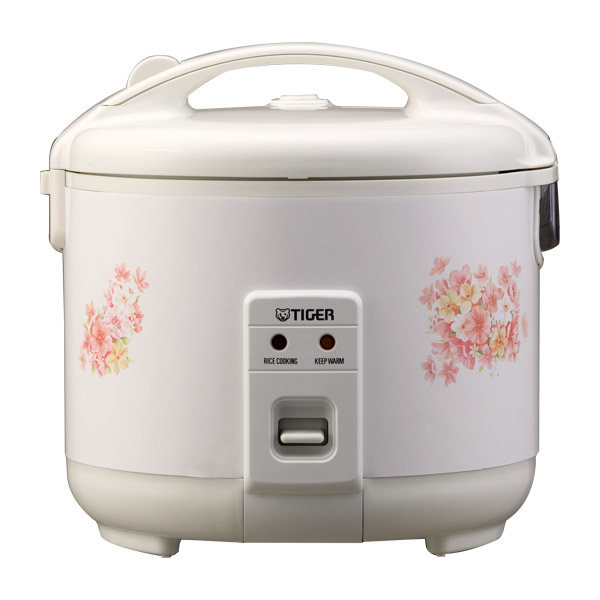
Pick JNP-1500 when three or more Tiger cups of plain white rice is the routine and an eight-cup maximum is enough. Compared with JNP-1800, it is shorter, slightly lighter, and draws a lower listed wattage; the tradeoff is a lower ten-cup ceiling on the larger model. If you need the same larger maximum but often want two-cup meals, neither big JNP model is documented for that small a batch. If your daily batch is one to five or so cups, compare the JNP-1000 before committing to the bigger footprint. The official JNP family image is not labeled by capacity, so use the exact suffix and dimensions—not the image alone—to distinguish these versions.
Bottom line: JNP-1500 is a simple capacity choice for medium and large plain-white batches. Buy into the three-cup minimum deliberately; the controls do not compensate for a batch size outside the manual’s range.
Key details at a glance
| Capacity and cup basis | Tiger's supplied cup is about 0.18 L / 5.29 oz (about 150 g level). JNP-1500: 3–8 supplied cups of Plain white rice only; cooked yield varies. No distinct rice shape, brown, porridge or mixed-grain plan is documented. |
|---|---|
| Closed width | 11.8 in |
| Closed depth | 10.7 in |
| Closed height | 10.7 in |
| Heating and controls | switch |
| Delay timer | No |
| Automatic Keep Warm | Yes |
| Supplied steaming basket/tray | No |
| GABA Brown program | No |
| Pressure-assisted rice cooking | No |
| My Rice feedback adjustment | No |
| Separate Slow Cook menu | No |
| Maker PFAS/BPA food-contact declaration | No |
| Documented combined rice method | No |
| Prescribed Cake program | No |
| Control arrangement | single_switch |
| Timer arrangement | none |
| Manufacturer material disclosure | Aluminum inner pot with a fluorine/fluorocarbon nonstick lining. Tiger's U.S. disclosure names JNP-1500 under products with PFAS intentionally added for nonstick properties; no health conclusion or separate BPA-free claim follows from that disclosure. The manual cautions against metal or abrasive utensils and recommends hand cleaning. |
Use the exact model’s instructions for operating limits, supplied equipment and version differences.
Sources for this assessment
Put your batch and serving needs together.
Choose the dry amount, grain program and useful accessories.