
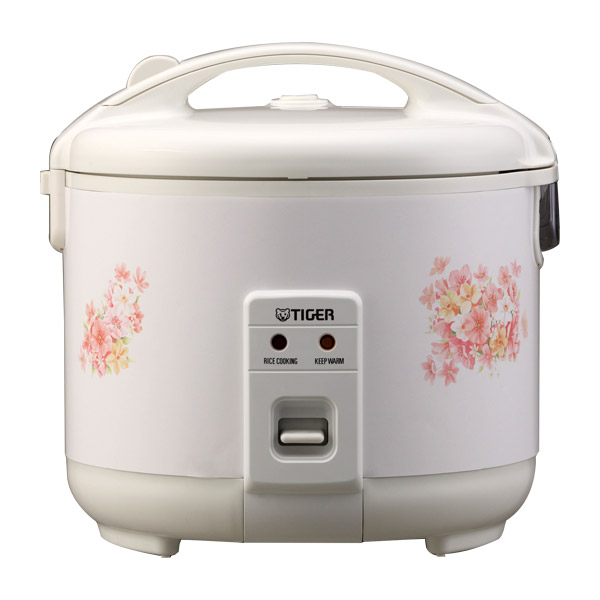
Your needs, this model
Does it fit your priorities?
Can the JNP-0550 make its maximum white-rice batch?
Yes. The exact U.S. manual lists a maximum of 3 level supplied cups for the Plain method.
Explore this need in the finder →Can the JNP-0550 make a white-rice batch outside its documented capacity range?
No. The exact manual range is 1–3 supplied cups; a batch outside that span is not confirmed for this model.
Explore this need in the finder →Can I require a delayed-finish timer on the JNP-0550?
No delayed-finish control is documented for the physical-switch model; automatic Keep Warm begins after cooking and is not a schedule.
Explore this need in the finder →Tiger · conventional rice cooker · current U.S. configuration
Tiger JNP-0550 review
The JNP-0550 is the smallest capacity in Tiger’s current JNP conventional series: a 0.54-liter cooker whose U.S. manual gives a 1–3 supplied-cup range for plain white rice. Its appeal is not a menu full of automatic programs. It is a small, straightforward cooker for someone who would rather choose a sensible batch size than pay counter space for a larger machine.
Why the 0550 size matters
Rice-cooker cups are not ordinary U.S. measuring cups. Tiger’s manual defines its supplied cup as about 0.18 liter, or 5.29 ounces, and says one level cup is about 150 grams. The three-cup ceiling therefore means three of Tiger’s cups of dry white rice—not three cups of cooked rice. The smallest listed batch is one supplied cup. That is a useful distinction if your regular meal is a modest portion for one or two people, but it rules out a half-cup routine and any larger batch. The next JNP-1000 begins at one cup as well; it buys headroom rather than a smaller minimum.
The published body is about 9.1 inches wide, 8.7 deep, and 8.8 high, with an approximate listed weight of 4.6 pounds. Those figures make it the compact choice in this four-size family. Leave room around it for escaping steam: Tiger’s manual advises at least 11.8 inches from walls or furniture. A tight shelf can defeat the attraction of a small body if the required clearance is unavailable.
A deliberately plain cooking routine
This is a heating-plate, single-switch design. You measure rice with the included cup, wash it in another bowl, add water to the corresponding Plain scale, seat the dry outer surface of the inner pot, close the lid, plug in, and press the cook switch. When the switch returns, the unit moves to Keep Warm; the manual asks you to leave the lid closed for roughly 15 minutes for steaming before fluffing the rice. There is no documented delayed-finish control, clock, pressure cooking, porridge program, brown-rice program, or simultaneous steam basket. The automatic warm transition is useful after cooking, but it cannot plan dinner for you.
The manual puts limits on that convenience. Keep Warm is for white rice, including rinse-free white rice, and should not be used longer than 12 hours. It also warns against warming less than the minimum amount, cold rice, mixed or seasoned rice, or a pot with a hole in the rice mound. The JNP-0550 is therefore a good fit for a fresh small white-rice batch, not a broad meal-prep appliance or a substitute for reheating leftovers.
Cleaning and materials are part of the choice
Tiger describes the pot as aluminum with a fluorine coating; the manual calls the lining fluorocarbon resin. The U.S. materials disclosure lists the JNP-0550 among products with PFAS intentionally added for nonstick properties. That is a materials disclosure, not a health assessment, and it does not establish that every food-contact material is free of other substances. If an explicitly PFAS-free pot is essential, do not treat this model as satisfying it. The coating also calls for gentle habits: use the supplied or a wooden spatula, wash rice outside the pot, use a soft sponge, and hand-wash the parts. The inner lid and steam vent are removable for cleanup, but the manual says not to put parts through a dishwasher or dryer.
Who should compare another model?
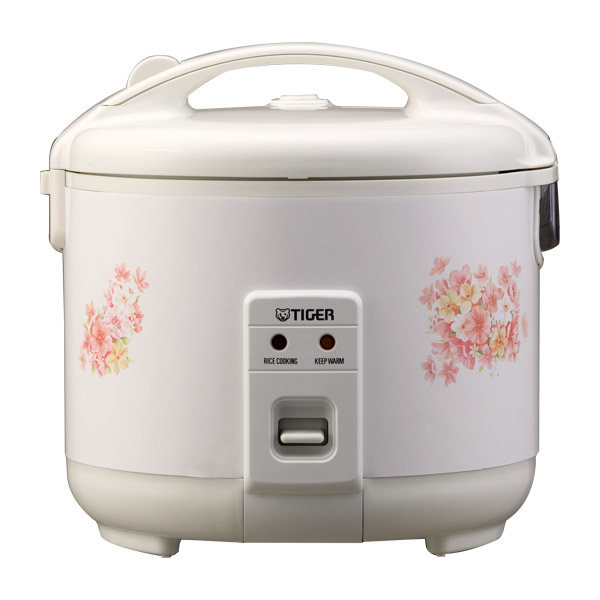
Choose the JNP-0550 when your usual white-rice batch is one to three Tiger cups and physical simplicity matters more than scheduling. Move to the JNP-1000 if a regular five-cup batch is possible; move to JNP-1500 or JNP-1800 only if you routinely cook at least three cups, since those larger plans start at three. The related JNP-S55U is a separately named model with the same manual’s 1–3-cup range, so check the exact suffix, dimensions, and listed configuration rather than assuming the family names are interchangeable. Tiger’s single JNP-series image is an honest family view, but the manufacturer does not identify which capacity is pictured.
Bottom line: JNP-0550 is the compact, one-to-three-cup member of a basic white-rice line. It does the simple job it documents; it does not add a timer, special grain modes, or a larger cooker’s lower-end flexibility.
Key details at a glance
| Capacity and cup basis | Tiger's supplied cup is about 0.18 L / 5.29 oz (about 150 g level). JNP-0550: 1–3 supplied cups of Plain white rice only; cooked yield varies. No distinct rice shape, brown, porridge or mixed-grain plan is documented. |
|---|---|
| Closed width | 9.1 in |
| Closed depth | 8.7 in |
| Closed height | 8.8 in |
| Heating and controls | switch |
| Delay timer | No |
| Automatic Keep Warm | Yes |
| Supplied steaming basket/tray | No |
| GABA Brown program | No |
| Pressure-assisted rice cooking | No |
| My Rice feedback adjustment | No |
| Separate Slow Cook menu | No |
| Maker PFAS/BPA food-contact declaration | No |
| Documented combined rice method | No |
| Prescribed Cake program | No |
| Control arrangement | single_switch |
| Timer arrangement | none |
| Manufacturer material disclosure | Aluminum inner pot with a fluorine/fluorocarbon nonstick lining. Tiger's U.S. disclosure names JNP-0550 under products with PFAS intentionally added for nonstick properties; no health conclusion or separate BPA-free claim follows from that disclosure. The manual cautions against metal or abrasive utensils and recommends hand cleaning. |
Use the exact model’s instructions for operating limits, supplied equipment and version differences.
Sources for this assessment
Put your batch and serving needs together.
Choose the dry amount, grain program and useful accessories.